News & media
Stay updated on our research, events and industry collaborations
Articles
News · Scientific Blog Posts20.08.2026
Does Retigabine Turn Down the Volume on Sensory Neuron Excitability?
Some anti-epileptic and analgesic drugs work by blocking the channels that generate electrical activity. Retigabine works the opposite way. It opens a channel…
Cell ElectrophysiologyCROiPSC Cells
News · Scientific Blog Posts20.08.2026
MINI EPSCs in Human iPSC-Derived Neurons: Maturation Profiling Across Glutamatergic and Motor Neuron Subtypes
Human-induced pluripotent stem cell (iPSC)-derived neurons offer a uniquely relevant platform for studying synaptic function with direct human genetic context…
Cell ElectrophysiologyIn Vitro ElectrophysiologyiPSC
News · Scientific Blog Posts20.08.2026
Can an Anti-Epileptic Drug Quiet the Brain? From Raw Traces to a Potency Number
Epilepsy is fundamentally a disorder of runaway electrical activity — neurons firing too much, too fast, or too synchronously. Anti-epileptic drugs work by…
Cell ElectrophysiologyCortical NeuronsCRO
FAQs · News17.08.2026
Navigating Platform selection in Preclinical CNS and Pain Drug Discovery
In preclinical CNS and pain drug discovery, platform choice is governed by biology resolution rather than sheer throughput. Three primary modalities offer…
CROMultielectrode ArrayPain
News · Scientific Blog Posts04.08.2026
Do BDNF-treated rat cortical neurons show higher mEPSC frequency?
Miniature excitatory postsynaptic currents, or mEPSCs, are small, action-potential-independent currents produced by spontaneous synaptic-vesicle fusion. They…
Cell ElectrophysiologyCROmEPSC
FAQs · News20.07.2026
iPSC Cells for Drug Discovery: Assays, Pain Models, and CRO Evaluation
Why iPSC cells matter in CNS and pain drug discovery Induced pluripotent stem cells (iPSC cells for drug discovery) have become a practical route to…
Cell ElectrophysiologyCROiPSC Cells
News · Scientific Blog Posts01.05.2026
Assaying Synaptic Plasticity in Brain Slices: Paired Patch-Clamp and MEA Recordings in Ketamine-Treated Rats
Synaptic plasticity — the ability of synapses to strengthen or weaken in response to activity — is fundamental to learning, memory, and mood regulation. A…
Brain Slice electrophysiologyCROEx-Vivo Studies
News · Scientific Blog Posts27.04.2026
From Nature’s Toxins to the Pages of Nature: Supporting Neurotoxin Research at Scripps
Some of the most powerful tools in neuroscience did not come from a laboratory — they came from the ocean. Neurotoxins discovered in nature have been…
Cell ElectrophysiologyDRGIn Vitro StudiesNews · Scientific Blog Posts21.04.2026
Cell Electrophysiology in Drug Discovery: Functional Assays and Endpoints Across Neuron Models
Brain function is defined by orchestrated synaptic communication and action potential firing of neurons. Drugs (medicines) that modulate neuronal activity are…
News · Scientific Blog Posts23.03.2026
TRP Agonists Mobilize Calcium Responses in Rat DRG Sensory Neurons
Transient Receptor Potential (TRP) channels are key mediators of sensory neuron signaling and play a central role in nociception and pain pathways. Functional…
Cell ElectrophysiologyCRODRG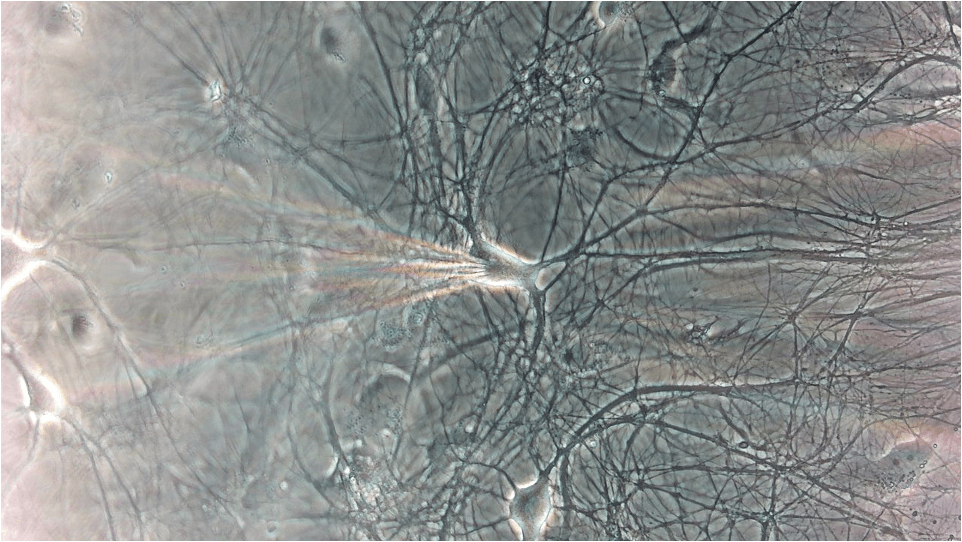
Scientific Blog Posts04.02.2026
NMDA Receptor Currents in Rat Cortical Neurons for Drug Discovery
To support CNS drug discovery programs, Neuroservices-Alliance designed and executed a patch-clamp electrophysiology study to characterize native NMDA receptor…
Cell ElectrophysiologyCortical NeuronsCRO
Events · News03.11.2025
Neuroservices-Alliance Partners with FUJIFILM Cellular Dynamics to Advance Human-Relevant CNS Research
Neuroservices-Alliance is proud to announce its partnership with FUJIFILM Cellular Dynamics, marking a new chapter in our shared mission to accelerate CNS and…
CRO