NMDA Receptor Currents in Rat Cortical Neurons for Drug Discovery
2 min read
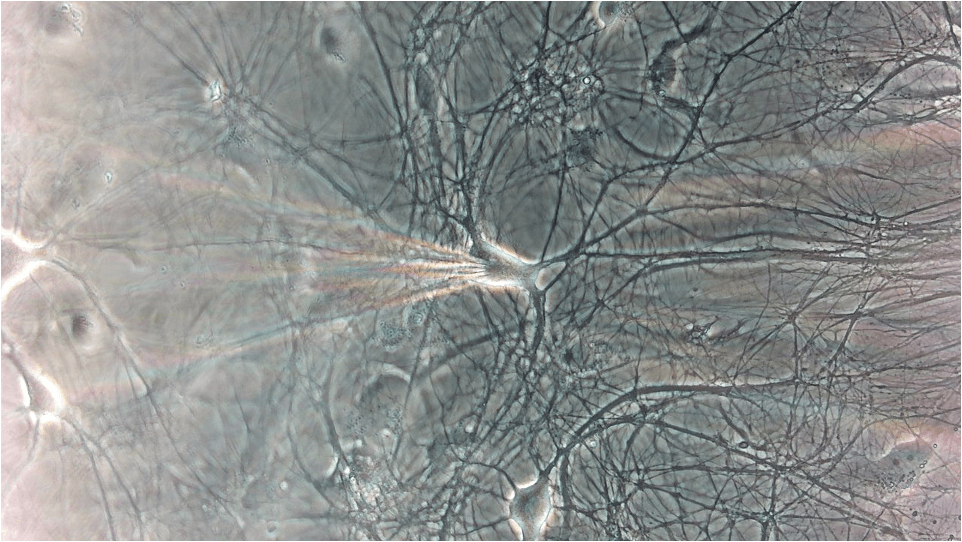
To support CNS drug discovery programs, Neuroservices-Alliance designed and executed a patch-clamp electrophysiology study to characterize native NMDA receptor currents in rat cortical neuron cultures and evaluate the pharmacological effects of test compounds in a controlled in vitro setting.
Primary E18 rat cortical neurons were enzymatically and mechanically dissociated and plated at low density on a monolayer of cortical astrocytes. Neuronal cultures were maintained with regular medium changes and recorded between 14–21 days in vitro, a timeframe selected to support stable synaptic receptor expression. Whole-cell voltage clamp electrophysiology was performed using standard instrumentation and acquisition software.
NMDA receptor–mediated currents were elicited by local puffer application of NMDA every 12 seconds following establishment of a stable baseline.
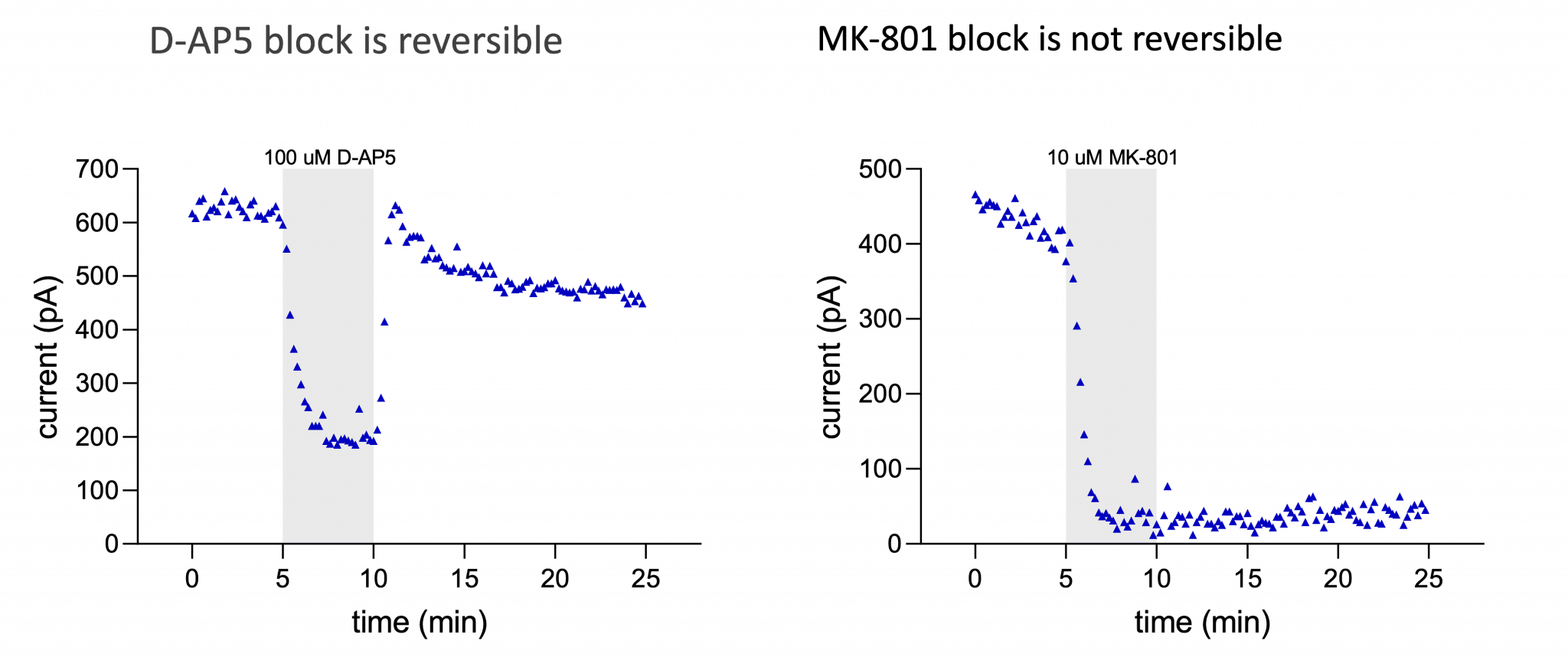
A) Reversible inhibition by D-AP5
B) Non-reversible inhibition by MK-801
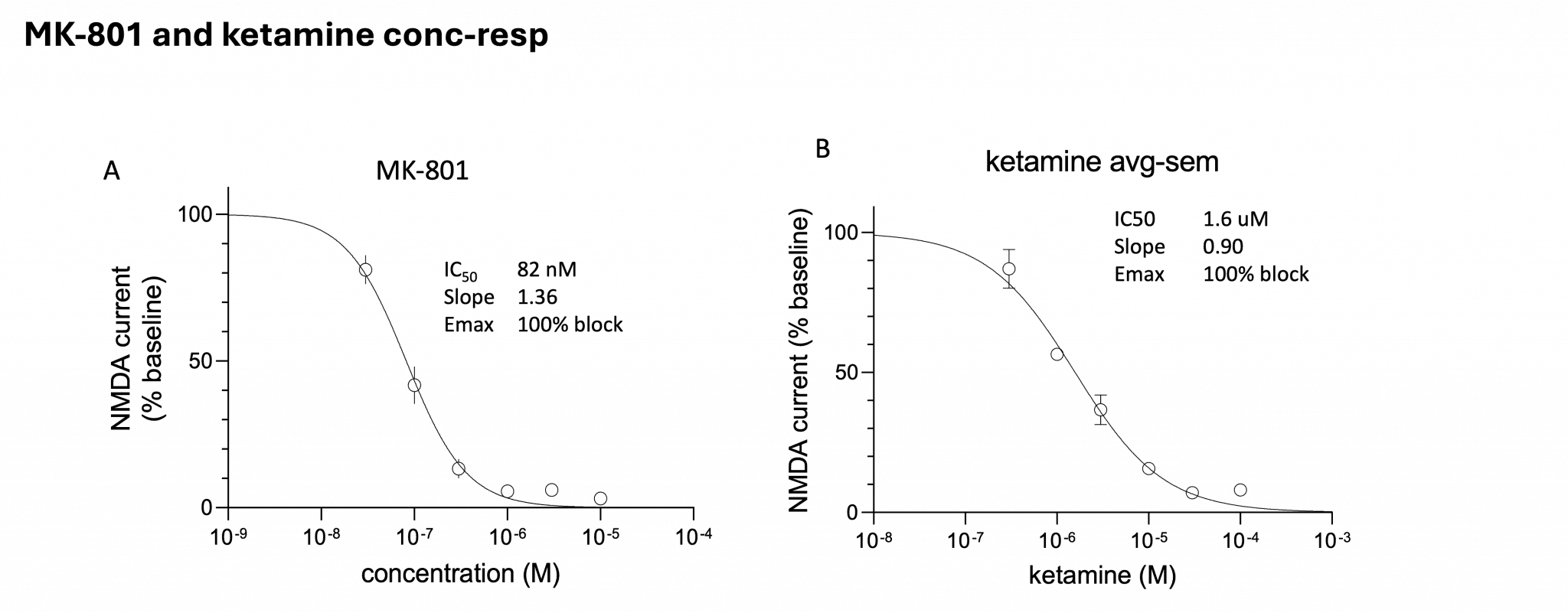
Concentration-dependent inhibition by A) MK-801 and B) ketamine
Using this study design, robust and reproducible NMDA receptor–mediated currents were recorded in rat cortical neurons. The assay successfully captured pharmacological modulation of NMDA currents, including:
These results confirm the suitability of this assay for quantitative evaluation of NMDA receptor pharmacology in primary neuronal cultures.
By integrating a well-defined study plan with standardized electrophysiology methods, Neuroservices-Alliance’s cell electrophysiology platform delivers reliable functional data for NMDA receptor characterization. This approach supports compound profiling, target engagement assessment, and mechanism-focused CNS research, providing a translationally relevant in vitro system aligned with early drug discovery needs.
Our cell electrophysiology lab is ready to collaborate with you to advance your drug discovery pipeline.
Related scientific posts
View all- Cell ElectrophysiologyWhich CRO Offers the Strongest HD-MEA Assay for DRG Pain Pharmacology?16.10.2026
- Addiction StudiesModeling the Long Shadow of Opioid Craving: What Cue-Induced Reinstatement Tells Us About Relapse28.09.2026
- Brain Slice electrophysiologyHow Long Should You Wait Before Trusting a Gramicidin-Perforated Patch? Characterizing E-GABA Assay Readiness in Rat Cortical Neurons26.08.2026