
Case study: ketamine on LHb firing activity
2 min read
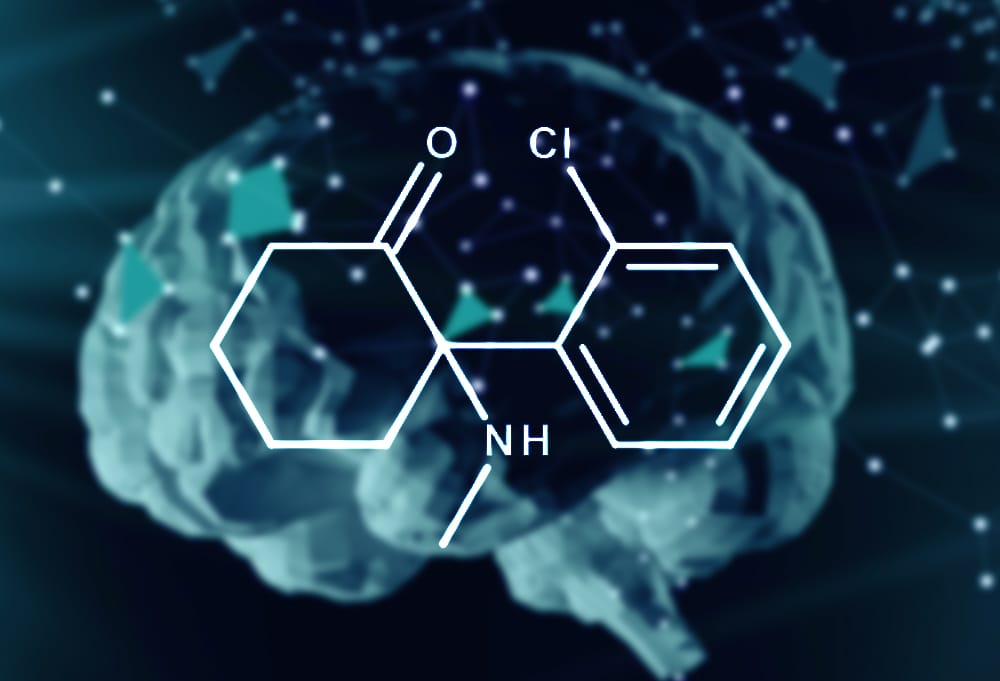
EVALUATION OF A DOSE-RANGE OF KETAMINE ON LATERAL HABENULA (LHb) FIRING ACTIVITY
Ketamine emerged in the last half-century as a drug used in treatment-resistant cases of depression.
The aim of the protocol presented here is to evaluate a concentration-range of ketamine on LHb firing activity by targeting N-methyl-D-aspartate receptors (NMDARs) using the Multi Electrode Array technology on rat brain slices. Ketamine has psychotomimetics and antidepressant effects and is a noncompetitive NMDAR antagonist. Finally, LHb neurons show a significant increase in firing activity in depressive-like animals, which is reversed by ketamine (Yang al. – Nature 2018).
MATERIAL & METHODS
In this study, experiments were carried out with 4 weeks-old rats on Sagittal slices containing the Lateral Habenula (LHbL). After a 20-minute periode of control recording of basal firing, 3, 10, 30, 70, 100 or 300 μM ketamine or the vehicle (0.1% H2O) is applied for 40 minutes. At the end, perfusion of slices is stopped for 10 minutes, to verify that anoxia indeed abolishes the firing activity.
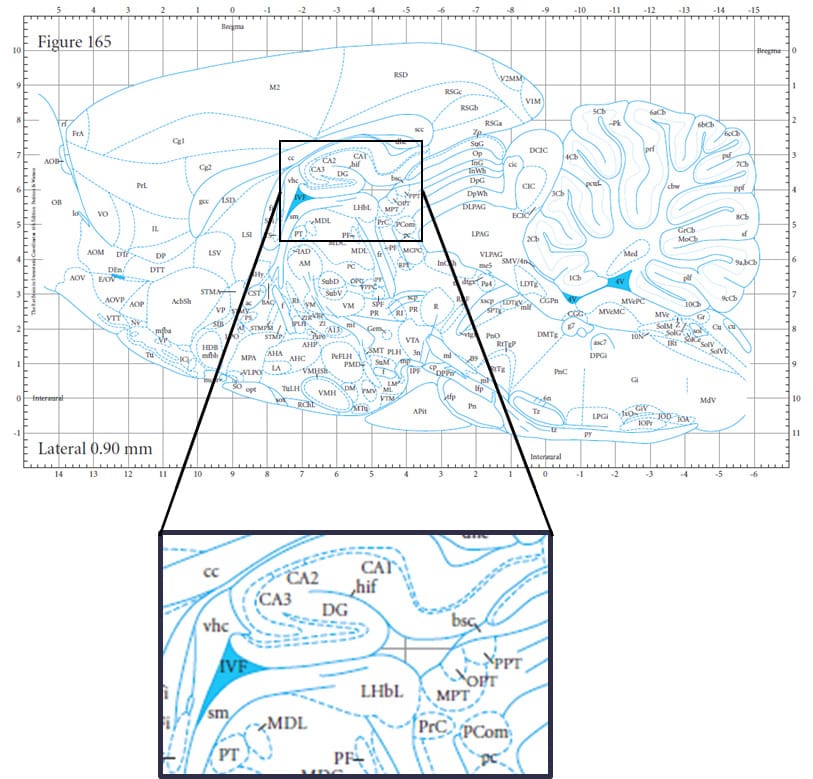
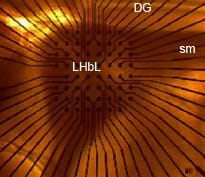
DG: Dentate Gyrus
LhbL: Lateral Habenular nucleus, Lateral
sm: stria medullaris thalamus
Localisation of the LHbL nucleus (left) and photo of MEA electrodes on rat Lateral Habenular nucleaus (right)
RESULTS
Ketamine – a noncompetitive NMDAR antagonist – dose-dependently decreased the firing activity of habenular neurons with an IC50 close to 100 μM.
Download the full case study for more details on preparation, recordings protocol and results of dose-response inhibition of ketamine in habenular neurons firing activity.
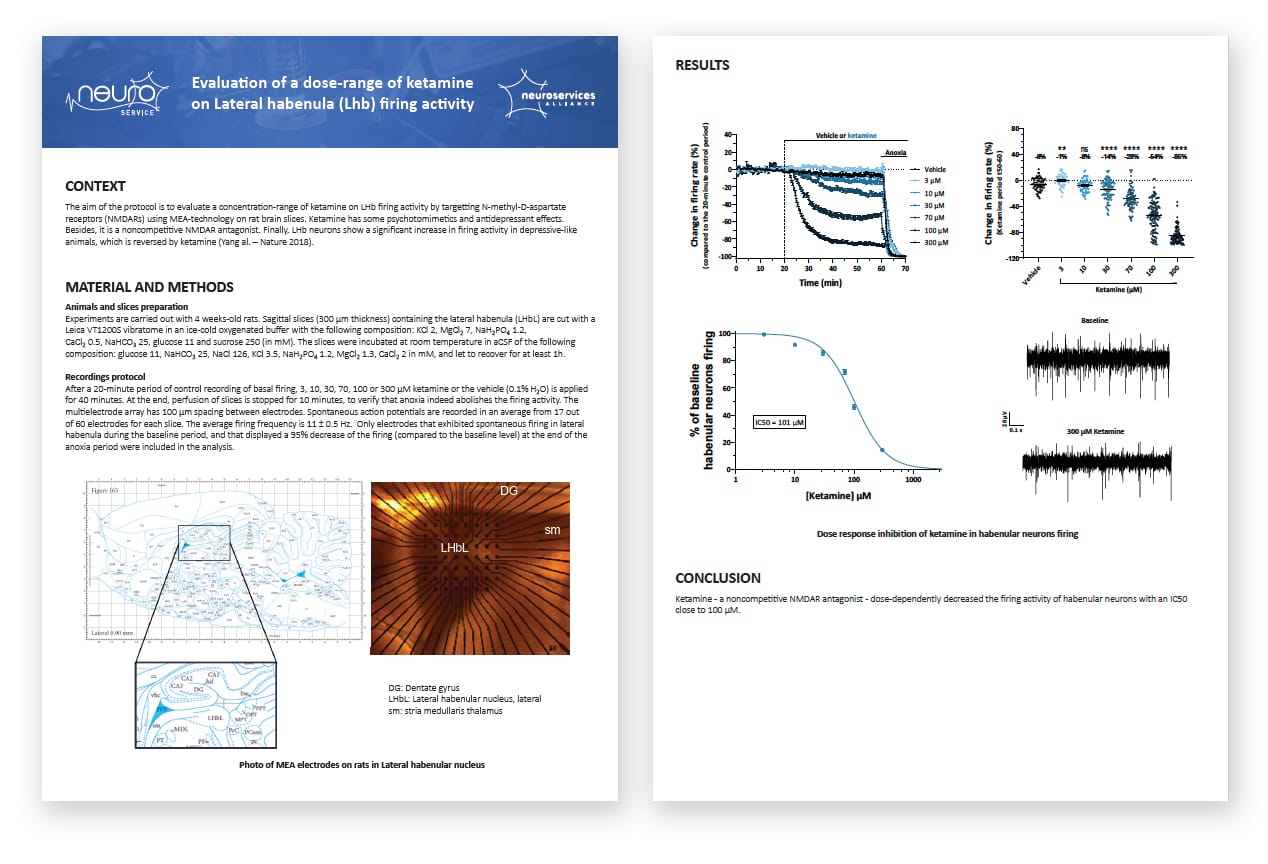
Evaluation of a dose-range of ketamine on LHb firing activity
Download
Related scientific posts
View all- Cell ElectrophysiologyWhich CRO Offers the Strongest HD-MEA Assay for DRG Pain Pharmacology?16.10.2026
- Addiction StudiesModeling the Long Shadow of Opioid Craving: What Cue-Induced Reinstatement Tells Us About Relapse28.09.2026
- Brain Slice electrophysiologyHow Long Should You Wait Before Trusting a Gramicidin-Perforated Patch? Characterizing E-GABA Assay Readiness in Rat Cortical Neurons26.08.2026